
What is Worldschooling? Our Family’s Guide & Experiences
Last Updated on October 8, 2026
We have been worldschooling our kid for the last 9 years – here’s what it looks like for our family, how we handle school and how we make it work financially.
Our daughter Kaleya is 11 and has traveled to 60+ countries. She’s walked on glaciers in Patagonia, snorkeled with sea lions in the Galapagos, watched elephants on safari in South Africa and eaten her way through Japan. But she enjoys a childhood just like any other kid – she has good friends at school, spends time with her dog Brownie, and loves to go to the playground down the street.
When I tell people we’re a worldschooling family, they usually picture us on the road nonstop, with a kid doing math worksheets on a beach. Our daily life is much more ordinary, and I think that’s exactly why it works for us. Since Kaleya was born, we’ve been living a slow nomadic lifestyle, setting up homebases in different countries and traveling from there, then changing homebases every few years. Since then, we’ve lived in the Netherlands, Mexico, South Africa and Spain, and we currently live in Tbilisi, Georgia.
In this guide, I’ll explain what worldschooling actually is, the different ways to do it, the education options we’ve tried (and what worked for us), and how we make a living while moving countries every few years.

Our Family’s Worldschooling Guide
What is Worldschooling?
Worldschooling is an approach to education that uses travel and the world around us as a learning tool. Instead of only learning about volcanoes, ancient civilizations or ocean ecosystems from a textbook, worldschooled kids get to see them, touch them and ask questions about them in real life.
The term is often linked to homeschooling and unschooling, but it’s much broader than that. There’s no single “right” way to worldschool. Some families travel full-time and homeschool on the road. Others send their kids to regular school and travel during holidays. And many, like us, fall somewhere in between.
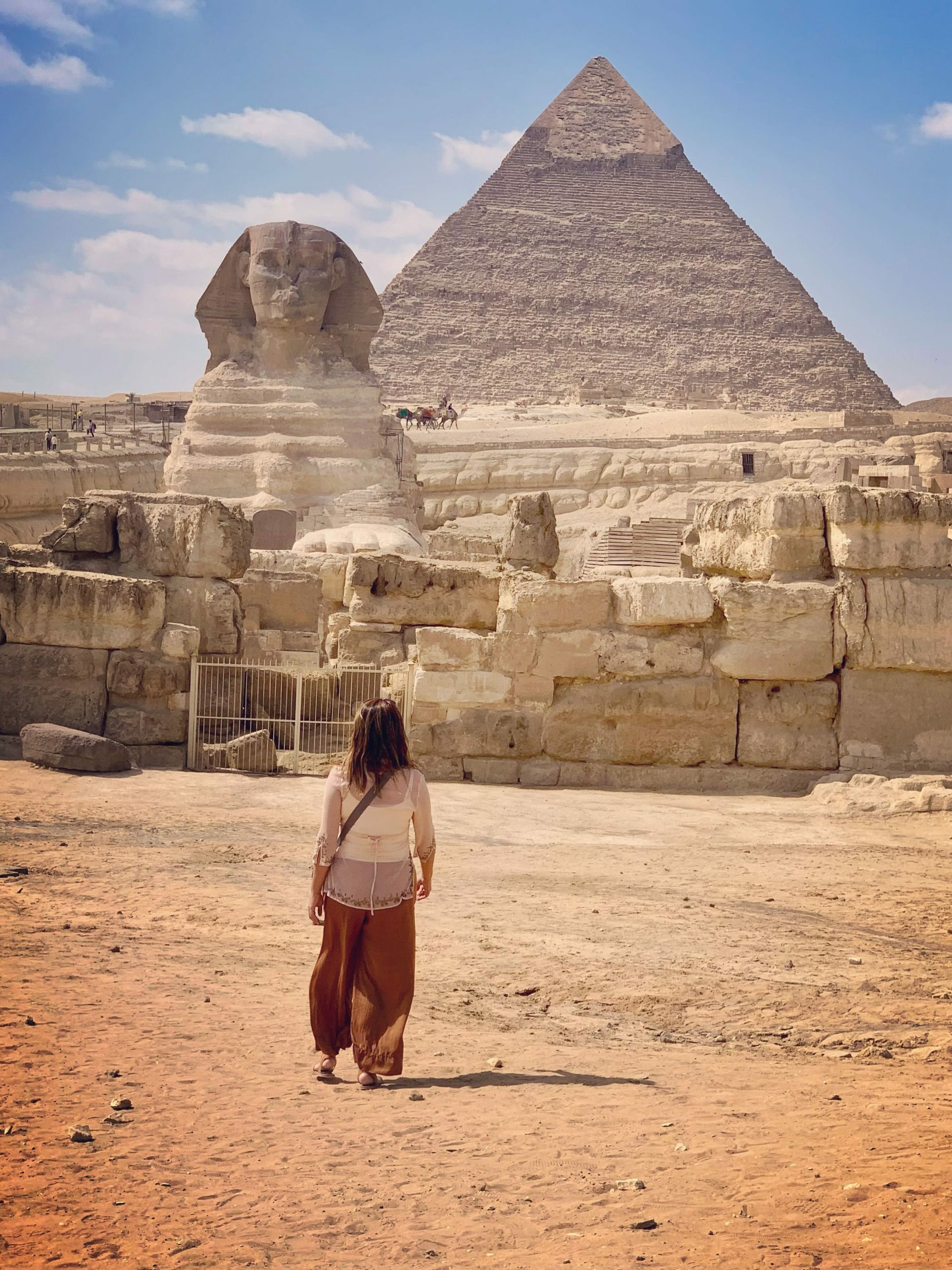
At its heart, worldschooling is a mindset, not a schedule. It’s the belief that the world is the best classroom, and that curiosity, empathy and adaptability are just as important as grades.
There are a lot of misconceptions about worldschooling, so let me clear up a few:
- It doesn’t mean quitting your job. You don’t need to sell your house and become full-time nomads. Plenty of worldschooling families have regular jobs.
- It doesn’t mean skipping education. Kids still need to learn to read, write and do math. Travel adds to their education; it doesn’t replace it.
- It doesn’t mean constant travel. Living out of a suitcase is exhausting, for kids and parents alike.
- It’s not just for rich families. Some of our best learning experiences were cheap or free: a local market, a hike, a museum on a free entry day.

Why Routine Matters
This is the part I wish more people talked about. Kids need routine. They need friends, a regular bedtime, a place that feels like home and time to just be bored.
We learned this early. When Kaleya was little, we noticed she was happiest when we had a base, close friends and a daily rhythm. Both Alberto and I also need a routine to make sure we do our jobs well – he’s a software engineer and I’m a travel writer, and we love our professions.
That’s why we don’t travel nonstop. We build a stable life in each country, with school, friends and activities, travel from there, and change homebases every few years. It gives her the best of both worlds: the security of a routine and the adventure of exploring new places.

What Kids Learn from Worldschooling
The lessons go far beyond geography:
- Languages: Kaleya has grown up hearing English, Spanish, Mandarin, Dutch and now Georgian (we just started classes).
- History and culture: Walking through ancient temples in Kyoto or old churches in Tbilisi makes history real.
- Science and nature: Marine life in the Galapagos, glaciers in Patagonia, wildlife on safari in South Africa.
- Adaptability: Starting a new school, making new friends and figuring out a new supermarket every few years teaches resilience.
- Empathy: Seeing how other people live, and that “normal” looks different everywhere, is the most valuable lesson of all.
- Practical skills: Reading maps, handling different currencies, navigating airports and ordering food in another language.

Our Worldschooling Model: Moving Homebases Every Few Years
There are three common ways families worldschool:
- Full-time travel: Moving every few days or weeks, usually homeschooling on the road. Exciting, but tiring, and hard for kids who crave stability.
- Slow travel / homebase hopping: Living in one country for a year or more, settling in properly, then moving on. This is us.
- Holiday worldschooling: Keeping a permanent home and job, and using school holidays, long weekends and the odd term-time trip to explore.
All three are valid. The best one is the one that fits your family, your work and your kid’s personality.

How It Works for Us
We tend to move countries every few years (sometimes every year), and we choose each new homebase carefully. We look at schools, cost of living, visas, safety, nature, flight connections and, honestly, the food! Once we arrive, we set up a real life: a rented apartment, a school, activities and friends. Then we use that base to explore the region on weekends and school holidays.
Homebase | Kaleya's age | What life looked like | Trips from there |
Georgia | 11 | International school, Georgian classes as a family | Just getting started! The Caucasus mountains are on our list |
Spain | 10–11 | Three months with family before our next move | Exploring the coast and visiting family |
South Africa | 10 | Our best year yet: beaches, hiking, safaris | Weekend safaris and glamping, Madagascar |
Mexico | 6–9 | A green school, beaches, outdoor life | Canada,Peru, Patagonia, the Galapagos |
The Netherlands | 2–6 | Biking everywhere, playgrounds, outdoor life | Skiing in Slovakia, Japan, trips around Europe |
We also fly to Singapore every year to see family, a yearly tradition Kaleya always looks forward to.

Worldschooling and Education: The Options
This is the question I get asked most: “But what about school?” The good news is there are more options than ever. Here’s an overview of the main ones, and what we’ve learned from trying several of them.
Option | How it works | Best for | Watch out for |
Homeschooling | Parents teach using their own curriculum or a mix of resources | Full-time travelers, flexible families | Huge time commitment for parents; check legal rules in each country |
Unschooling | Child-led learning driven by curiosity, no set curriculum | Very independent, self-motivated kids | Gaps in core subjects; hard to return to mainstream school |
Accredited online school | A structured online school with teachers, classes and recognized diplomas | Families on the move who want continuity | Screen time, time zones, less social contact |
Local schools | Enrolling in the public or private school in your host country | Language immersion, deep cultural integration | Language barrier, different curriculum, paperwork |
International schools | English-language (or bilingual) private schools, often IB, British or American curriculum | Families moving every few years | Fees can be high; quality varies |
Holiday worldschooling | Regular school at home, travel during breaks | Families with fixed jobs | Limited travel time; term-time trips can be restricted |

What Has Worked for Us
We’ve tried a few of these over the years, and each one taught us something.
- A local green school in Mexico: When we lived in Mexico, Kaleya went to a green school, focused on nature, sustainability and hands-on learning. She made great friends, spent loads of time outdoors and absolutely thrived. The teachers were nurturing and loving. It showed us how much she loves learning when it’s practical and connected to the real world.
- Accredited online school: In Cape Town, Kaleya did a term of accredited online school. It gave us a lot of flexibility to travel, and it kept her on track academically. But we also realized she missed having classmates and a daily routine outside the home.
- An international school in Tbilisi: Now Kaleya is at a British international school in Tbilisi, and we’re really happy with it. Her classmates come from all over the world, the school is well organized and the facilities are great. For a kid who moves every few years, it’s comforting to be surrounded by other kids who understand what that feels like.

Our tips for choosing an education option
- Think about your child, not just your travel plans. Is your kid social? Independent? Do they need structure?
- Plan for continuity. If you move often, a consistent curriculum (like IB or British) makes transitions much easier.
- Check the legal side. Homeschooling rules vary a lot between countries, and some require registration.
- Keep records. Save report cards, certificates and work samples. You’ll need them when switching schools.
- Stay flexible. What works at age 6 may not work at 11. We’ve changed our approach several times, and that’s okay.
- Visit before you commit. We always try to visit schools in person (or at least have a video call) before enrolling.

How We Make Money While Worldschooling
The second question I always get: “How do you afford it?” The short answer: we work. Worldschooling isn’t a permanent vacation. It’s a lifestyle built around location-independent work.
Our Income Streams
I’ve been working remotely since long before the term “digital nomad” was a buzzword. I started travel writing in 2008, that’s a long time ago! Our income has changed a lot over the years, and it’s never come from just one source:
- Remote work: Alberto works as a software engineer for a company in the Netherlands that allows him to work fully remote as long as he keeps his hours.
- Travel writing: I’ve written for publications like Lonely Planet, Rough Guides and BBC Travel, and freelance writing is still part of the mix.
- Book writing: Currently I write guidebooks for Lonely Planet and go on research trips often to do on-the-ground research.
- Blogging: Wild Junket has been running since 2008. Traffic isn’t what it used to be, but it still earns from sponsored articles and partnerships.
- Content creation: These days, I’m focusing more on Instagram, sharing our life as a worldschooling family and working with brands, tourism boards and hotels.
We use a VPN every time we’re on a network we don’t control. If you run a business or work with a team, a business-grade VPN like Proton VPN for Business is worth looking into. It encrypts your connection, has servers in over 140 countries, and offers dedicated IP addresses, which is handy when your bank or client systems flag logins from a new country. Since Proton is based in Switzerland and known for its focus on privacy, it gives me peace of mind when we’re logging into accounts from a new country every few years.

Remote Jobs that Work for Worldschooling Families
If you’re wondering how you could do this, here are some of the most common ways families we’ve met fund their lifestyle:
- Keep your current job. Many companies now allow full remote work. Ask! It’s often the easiest route.
- Freelancing: Writing, design, web development, marketing, translation, virtual assistance.
- Online teaching and tutoring: Languages, music, academic subjects.
- Consulting or coaching in your area of expertise.
- Running an online business: E-commerce, digital products, courses.
- Content creation: Blogging, YouTube, Instagram (but be patient; it takes years to build).
- Renting out your home back in your home country to cover costs.

Choosing a Homebase that Makes Financial Sense
Where you live makes a huge difference to how far your income goes. One of the reasons we chose to live in Tbilisi is the lower cost of living compared to Western Europe. Georgia also has a generous visa policy for many nationalities and an Individual Entrepreneur tax status with a 1% rate on turnover for eligible small businesses (always check your own situation with a tax advisor, as rules depend on your nationality and residency).
Other things we look at: the cost of rent and schools, how easy it is to open a bank account, internet speed and whether there’s an international community.

The Pros and Challenges of Worldschooling
I’d be lying if I said it was all sunsets and safaris. Here’s the honest picture.
The best parts
- Kaleya is curious, confident and adaptable. She doesn’t struggle with new environments and usually has no problems making friends in each new school.
- She sees the world as a friendly place. She has friends from dozens of countries and isn’t afraid of what’s different.
- We spend a lot of quality time together as a family, exploring, learning and laughing.
- Learning is real. History, science and geography make so much more sense when you’ve seen them up close.

The challenges
- Goodbyes are hard. Leaving friends behind every few years is the toughest part, for Kaleya and for us.
- Admin never ends. Visas, school applications, bank accounts, rental contracts, pet paperwork.
- It can be lonely. It takes time to build a community in each new place.
- Gaps in education. Switching curricula can leave gaps, so we keep an eye on core subjects.
- Financial uncertainty. Freelance and creator income goes up and down, so you need savings and a backup plan.

How to Start Worldschooling: Tips for Beginners
- Start small. Try a month abroad during the summer holidays, or a long trip from home, before committing to a big move.
- Figure out your income first. Make sure you have reliable remote work before you leave.
- Decide on education early. Research schools or online programs before choosing your destination.
- Choose family-friendly homebases. Safety, healthcare, schools, parks and nature matter more with kids.
- Involve your kids. Let them help choose destinations, plan trips and research what to see. They’ll be more excited and engaged.
- Keep a routine. Regular bedtimes, school hours and downtime keep everyone sane.
- Turn everyday life into learning. Grocery shopping in a foreign language, budgeting with a new currency, cooking local recipes together.
- Connect with other families. Look for worldschooling Facebook groups, local expat communities and international school parent groups.
- Don’t compare. Every family’s worldschooling looks different. Do what works for yours.

Final Thoughts
When people ask me what worldschooling is, I tell them it’s simply using the world as a classroom. It doesn’t have to mean quitting your job, selling everything or traveling nonstop. For us, it means building a stable, happy life for Kaleya in a new corner of the world every few years, and exploring as much as we can from there.
It’s not always easy, and we’ve made plenty of mistakes along the way. But when I watch Kaleya chatting with her classmates from around the world, ordering food in Spanish or asking a hundred questions about a place we’ve just visited, I know it’s worth it.
Now we’re starting a brand new chapter in Georgia, and I can’t wait to see what this one teaches us.
Are you a worldschooling family, or thinking about becoming one? I’d love to hear about your experiences or answer any questions in the comments below!
If you’re thinking about worldschooling or settling abroad with your own family, these are my guides to the places we’ve lived, along with the travel essentials, tools and family logistics that make life abroad easier.
- How We Keep Our Child Safe While Traveling
- Living in Tbilisi
- Moving to Mexico
- Moving to Amsterdam
- Living in Spain
- Living in Cape Town
- How We Find the Right eSIM for Travel
- 20 Best Travel Apps
- Best Travel Insurance
- My Ultimate List of Resources for Digital Nomad Families
- How We Navigate the World as a Digital Nomad Family
- 30 Countries with Digital Nomad Visas
Disclaimer: This post contains affiliate links i.e. if you book a stay through one of my links, I get a small commission at NO EXTRA COST to you. Thank you for your support!
Inspired? Pin It!

