
How We Navigate the World as a Digital Nomad Family
Last Updated on July 13, 2026
We have been traveling with our daughter since she came along 10 years ago, worldschooling and working remotely around the world. Here’s how we do it.
One of the first things people ask when they hear about our life is, “How do you actually do it?” I think they imagine us being on a permanent holiday. The truth is, our life isn’t a long vacation; we have full-time jobs and our daughter goes to school like everyone else – we just do it in different parts of the world. It’s a lifestyle that we’ve intentionally designed over the past 10 years, using a mix of experience, trial and error, and trusted resources for digital nomad families that support work, education, and community on the road.
Ever since I met my husband 20 years ago, we’ve always traveled – from our first home-base in London to far-flung places like Antarctica and Zimbabwe. I love travel so much that I carved a career as a travel blogger and writer. When Kaleya came along 10 years ago, we didn’t stop traveling; in fact she gave us the push we needed to be nomads and travel more intentionally, with the world as her classroom.
But with two remote careers and a child’s education to consider, we knew we needed a system for this lifestyle to work. We don’t travel full time – we spend years in each country, allowing ourselves to immerse ourselves and truly become a part of a community. In this article, we’ll share our process: how to find a long-term home, how to ensure our daughter’s education is consistent, how to stay seamlessly connected for work, and most importantly, how to be a part of a community.

Table of Contents
How do Digital Nomad Families Live?
In the past 10 years, we’ve met our fair share of digital nomad families who travel the world while working remotely and homeschooling their kids (or sending them to international schools). The rise of remote work and incredible online learning platforms has unlocked possibilities we could only have imagined a decade ago.
Being a digital nomad is no longer a lifestyle reserved for solo travelers in their twenties. As a “slow nomad” family, we usually choose a homebase that has a big international community, kid-friendly amenities, great schools and affordable cost of living. This way, we give our kid (and us) stability and routine that helps us balance work, school and life. We still travel from our homebase often, with weekend trips, two-week jaunts, and a long two-month summer trip.
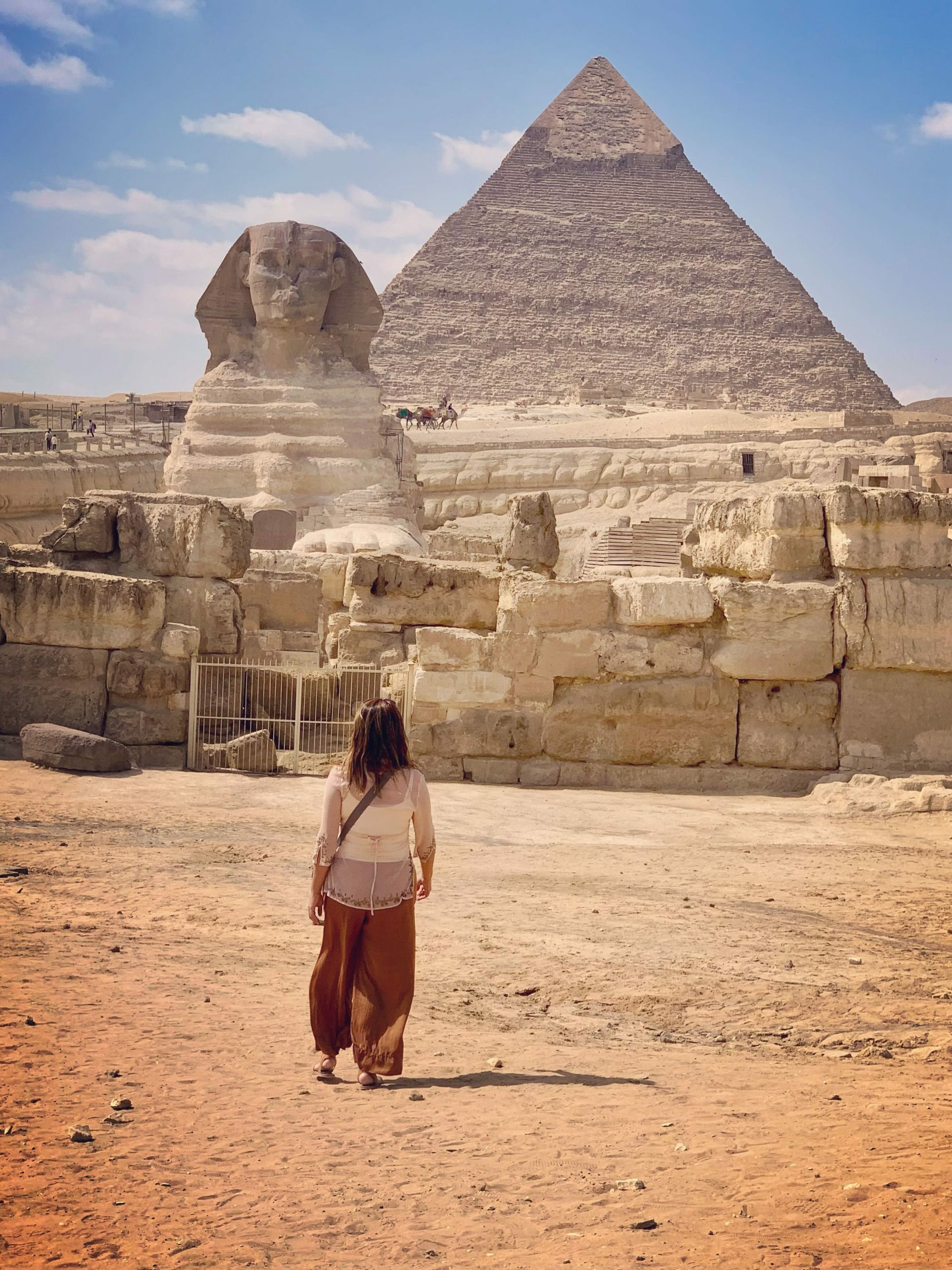

Our Story of How We Became Digital Nomads
This life didn’t happen overnight. I’ve been a full-time travel blogger and writer since 2008, and can literally work from anywhere in the world. But my husband had to work in a physical office as a software engineer.
Still we built our lives around long trips and adventures, with our homebase in Spain. He has quit his job to volunteer in Tanzania with me for a few months, taken a scholarship to do a Masters program in Singapore for a year and a sabbatical from work to live in Bali for 3 months. We eventually moved to the Netherlands for his work and built an amazing life there. But it never felt enough – we were nomads temporarily, but we weren’t truly free.
The real shift came when my husband’s career became fully remote (partly thanks to covid). This freedom allowed us to design our life with intention. We knew we didn’t want to travel full-time, bouncing from place to place every few weeks. So we moved to the Caribbean coast of Mexico, spending most of our time outdoors, exploring the Mayan temples, ruins and jungles in the area.
After 2 years, we craved to connect with more Mexican culture, so we stuffed our car with all our belongings and moved to San Miguel de Allende in the center of Mexico where we were part of an amazing community. 2 years later, we decided it was time to go again and we’ve since been living in Cape Town and absolutely loving the accessible nature, outdoorsy life and stunning backdrop.

Benefits of Being a Digital Nomad Family
We absolutely love being a digital nomad family – it allows us to enjoy the freedom of living where we want to, experience new places and cultures on a deeper level and still maintain that stability we need for our careers and our kids’ needs.
It’s also an absolute privilege to worldschool our kid and give her a far richer education than the conventional one. She’s learned practical math by using cash and buying trinkets in the markets of Oaxaca, practiced speaking Mandarin at museums in Shanghai, learned geography by walking on glaciers in Patagonia and marine biology in the tidal pools of Cape Town. More than that, she’s developing life skills that are impossible to teach in a traditional classroom: adaptability, cross-cultural empathy, and a quiet confidence in navigating the unknown.
Living in Mexico and South Africa, we spend less on housing, food, and activities as they cost less here than in the Netherlands or Spain. It means we can afford to eat out more, do more fun activities, spend more on travel and enjoy quality time together as a family.

The Hard Truths of this Lifestyle
As much as we love this life, it’s not always easy and comes with its challenges. When you move to a new country, you have to re-learn the simplest things: how the grocery store is laid out, how to get around, how to navigate the local bureaucracy, how to properly greet a neighbor etc. There’s a steep learning curve involved, but it’s also new and exciting.
The hardest part for many is the feeling of rootlessness, the sadness of leaving a home base. Our experience is a bit different. We don’t have one single “home” to go back to. I’m from Singapore, my husband Alberto is from Spain, and our daughter Kaleya has grown up in the Netherlands, Mexico, and South Africa.
For us, home is not a country – it’s the three of us. It’s our little family unit, wherever we happen to be. It’s the familiar smell of our cooking in a new kitchen, it’s our shared inside jokes, it’s unpacking the small collection of meaningful objects that travel with us. Each country we’ve lived in has given us a piece of its identity, and we carry those places with us.
And alongside everything else, safety is another real part of this lifestyle, especially when you’re moving through constantly changing places with children. If you want to see how we deal with it in practice after visiting more than 60 countries as a family, you can read my guide on keeping children safe while traveling.

How We Actually Manage It All
These are the systems and tools we rely on to make everything run smoothly.
Finding a Long-Term Home
We have a tried-and-true process for this. We start by booking an Airbnb for our first month. This gives us a comfortable, stress-free base to explore different neighborhoods in person. Once we’ve identified a few areas we like, I dive into Facebook Marketplace and local expat rental groups. This is how we find great properties directly from landlords. For a multi-year stay, we also use local real estate platforms like Property24.co.za in South Africa and Inmuebles24.com in Mexico, contacting agents directly to negotiate longer-term leases.


Education That Moves With Us
Our daughter’s education is our top priority, but we have always preferred alternative schools to strict, traditional ones. She has attended several project-based schools: Optimist International School in the Netherlands, El Arbol in Playa del Carmen, Academia Internacional in San Miguel de Allende, and the International School of Cape Town.
This year, we decided to finally give home schooling a try for more flexibility – and it’s turning out to be better than we’d imagined. Kaleya currently uses Maevious, a fully accredited online school based on the UK curriculum. It offers live, interactive classes with certified teachers. As she’s very strong academically, she gets to skip a grade and now does Grade 6/7 English and Math. It’s also her first time trying out subjects like Biology, Chemistry, Geography and History; she’s already hooked on Computing where she gets to code her own games.
As these online classes are very focused, she finishes school in just 4 hours and gets the rest of the day to explore with us or pursue other interests. We get to enjoy slow mornings with her, and her afternoons are reserved for fun outdoor activities like rockclimbing, mountain biking and gymnastics. On some days, we also meet other homeschooling kids for museum visits, beach days and excursions around Cape Town.


Our Connectivity Lifeline
Reliable internet is essential to our jobs and our daughter’s school. In the past, landing in a new country meant a frantic search for a local SIM card. Now, we use a global Pangia Pass eSIM, a single plan that gives us unlimited data in over 105 countries. The moment our plane touches down, our phones are instantly connected. It has been an absolute game-changer.
The convenience is hard to beat. Landing in Cape Town, I was able to book our Uber and message our new landlord while we were still taxiing to the terminal. It means we have immediate access to Google Maps to navigate to our new home and can keep us connected to work during the inevitable waiting periods. The only downside is that Pangia Pass only covers 105 countries – some places that we recently traveled and plan to visit, like Madagascar, Ethiopia and Namibia are not covered.


Building a Community From Scratch
Since we travel slowly, building a community is an active, intentional process. We enroll our daughter in local activities, we join homeschooling clubs, and we actively reach out to people. We use Facebook groups to find other traveling families and worldschoolers. Expat groups in each city/town are the best resource as is the Worldschoolers Facebook group.
Ultimately, building a community takes time, effort, and vulnerability. It’s about being the first to say hello at the playground, inviting a new family over for a braai, and showing up consistently. It’s a slower, more organic process, but the friendships we build this way are what make a new country feel like home.

Generally, your tax obligations depend on your citizenship and your tax residency — where you spend a significant amount of time (often defined by a “183-day rule”). Many countries have “double-taxation treaties” to prevent you from being taxed twice on the same income. If you have a digital nomad visa, you do not need to pay taxes in the country where you’re temporarily living.
Disclaimer: We are not tax professionals, and this is not financial advice. It is absolutely essential that you hire a specialized accountant who understands international tax law.

Travel Insurance is Non-Negotiable
We never, ever travel without comprehensive health insurance. For our unique lifestyle, we’ve found SafetyWing to be the perfect fit. We’ve used it for years now. Their Nomad Insurance plan provides solid coverage and is specifically designed for people on the move. The biggest selling point for us is their family policy: one child under 10 per adult (up to two children per family) is included on your insurance for free. It’s a huge saving and gives us invaluable peace of mind.

Final Thoughts on a Life Redesigned
We love the life we’ve built. We know from experience that spending years in a country creates a depth of connection and a wealth of memories that a short trip never could. It allows you to call a new corner of the world your home, even if just for a chapter.
This lifestyle is hard work, it has its challenges, and it requires a leap of faith. But for our family, the reward — a life of deep immersion, global perspective, and unforgettable shared adventures — is worth everything.

Further Reading
Thanks so much for reading this far! I hope our journey as a digital nomad family has offered helpful insights and perhaps even inspired you to take the leap yourself.
Is there a country you’re dreaming of living in or starting your nomadic journey with? Feel free to share in the comments below, and let me know if you have any questions. I’m always happy to help.
If you’re considering the digital nomad lifestyle with your family, you might enjoy these articles:
- 30 Countries with Digital Nomad Visas
- Resources for Digital Nomad Families
- How We Keep Our Child Safe While Traveling
- Living in Cape Town as a Digital Nomad Family
- Living in Bali as a Digital Nomad Family
- The Reality of Being A Digital Nomad
- Living in Spain
- How to Move to Mexico
- Moving to Amsterdam
- How to Plan a France Family Trip
- Best Destinations for Safari with Kids
- Peru with Kids
- Austria with Kids
- Singapore with Kids
- My Portugal Family Travel Guide
- Madagascar with Kids
- How to Choose an eSIM for Travel
Disclaimer: This post contains affiliate links i.e. if you book a stay through one of my links, I get a small commission at NO EXTRA COST to you. Thank you for your support!
Inspired? Pin it!

